


- Messages
- 4,003
- Likes
- 1,873
- Points
- 2,130
EF6/F6 specialists have discovered a new fraudulent scheme in Telegram channels that provide illegal access to new movies, TV series, and shows. Users are first lured with free episodes, then invited to participate in an auction where they supposedly can win money. In reality, the prize is only an unpleasant, paid experience.
According to EF6/F6, the scheme has intensified following the release of new seasons of popular Russian TV series and shows. The experts found at least three themed channels hosting these auctions. Each had an average of 6,000-7,000 subscribers.
It all works through a piracy scheme. The main channel publishes links to closed channels with new episodes. Access is granted upon request, as illegal content in the public domain is blocked more quickly. The audience is vibrant and engaged: people have come for the latest episodes.
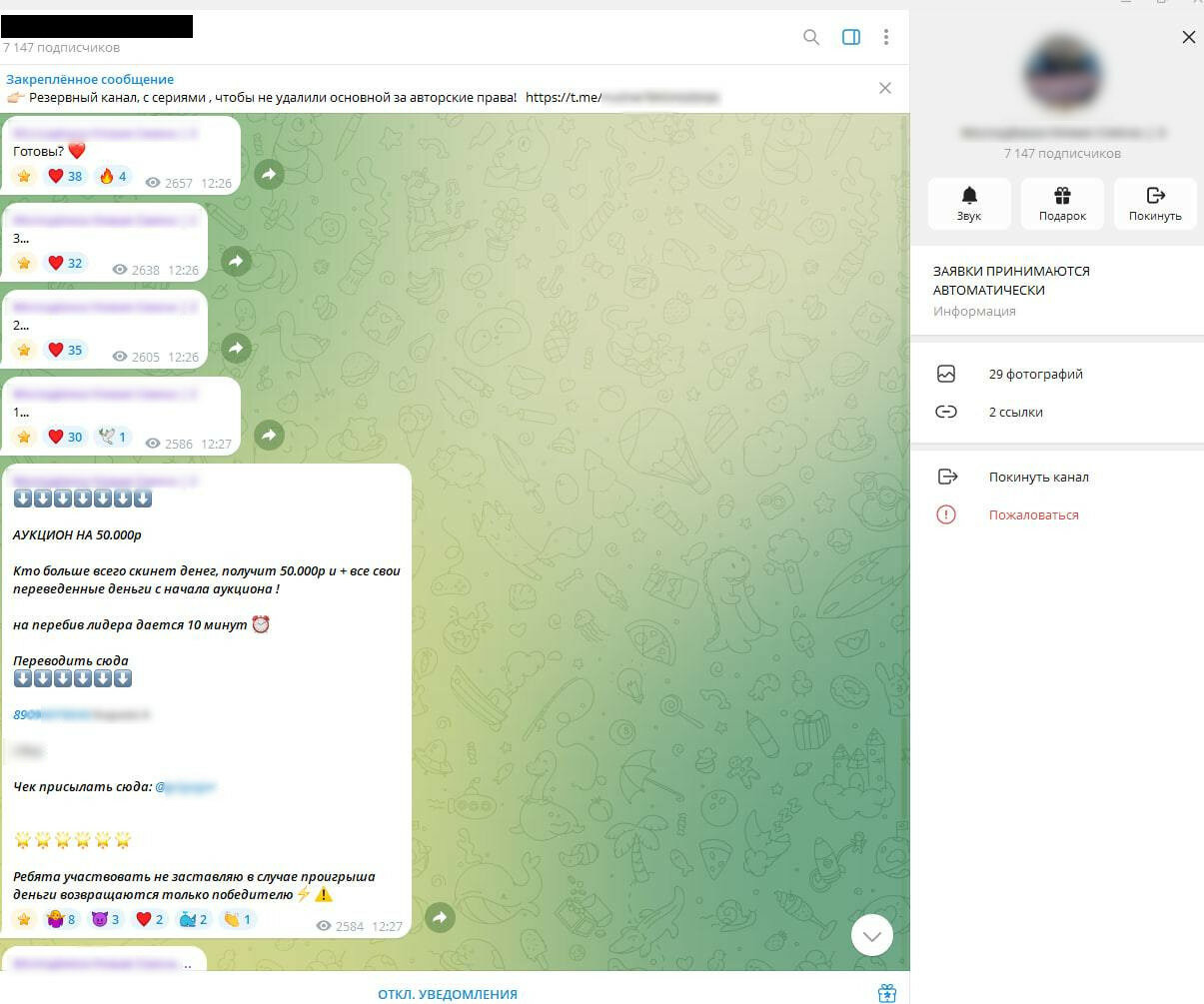
Once enough subscribers are acquired, administrators launch the auction. Users are asked to transfer money to a card or phone number. The person who supposedly transfers the most will receive a prize of 45,000 to 250,000 rubles and a refund of all their transfers since the auction began.
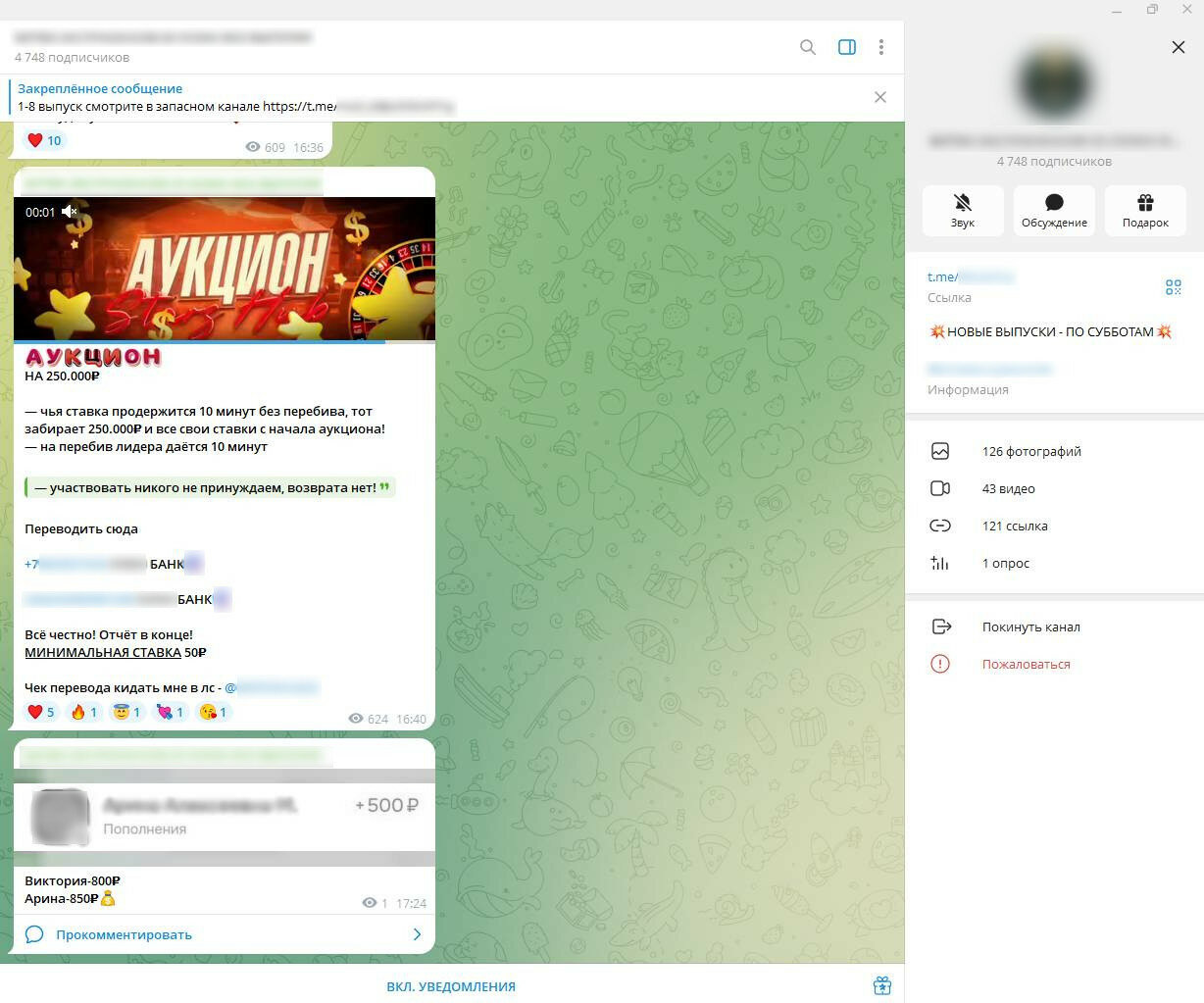
Naturally, it's impossible to verify the integrity of such a scam. The channel publishes lists of participants, transfer amounts, and screenshots of bank receipts. But the administrator can enter any amount, and faking a screenshot is a school-level task.
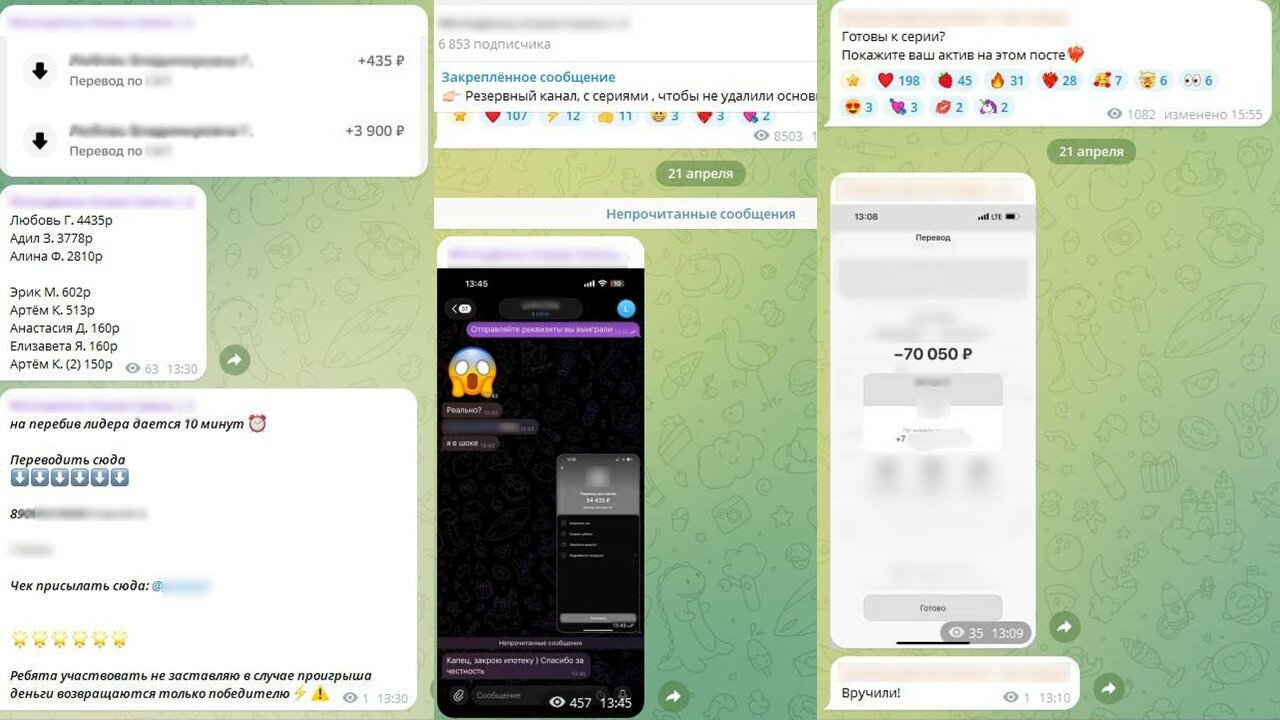
To prevent people from thinking, the scammers set a timer: they give 10-15 minutes to outbid. Then they publish supposed correspondence with the winner or a receipt for the winnings. After the auction ends, all posts are deleted, and the channel once again appears to be a regular pirate site.
It's especially amusing that in one of these giveaways with a prize of 70,000 rubles, the maximum bid, judging by the channel's posts, was only 50 rubles.
According to EF6/F6, the scheme has intensified following the release of new seasons of popular Russian TV series and shows. The experts found at least three themed channels hosting these auctions. Each had an average of 6,000-7,000 subscribers.
It all works through a piracy scheme. The main channel publishes links to closed channels with new episodes. Access is granted upon request, as illegal content in the public domain is blocked more quickly. The audience is vibrant and engaged: people have come for the latest episodes.
Once enough subscribers are acquired, administrators launch the auction. Users are asked to transfer money to a card or phone number. The person who supposedly transfers the most will receive a prize of 45,000 to 250,000 rubles and a refund of all their transfers since the auction began.
Naturally, it's impossible to verify the integrity of such a scam. The channel publishes lists of participants, transfer amounts, and screenshots of bank receipts. But the administrator can enter any amount, and faking a screenshot is a school-level task.
To prevent people from thinking, the scammers set a timer: they give 10-15 minutes to outbid. Then they publish supposed correspondence with the winner or a receipt for the winnings. After the auction ends, all posts are deleted, and the channel once again appears to be a regular pirate site.
It's especially amusing that in one of these giveaways with a prize of 70,000 rubles, the maximum bid, judging by the channel's posts, was only 50 rubles.