


A 23-year-old student named Lin has been arrested in Taiwan, accused of interfering with the THSR high-speed rail network. According to local media , on April 5, the young man managed to stop four trains at once by transmitting an alarm signal to the TETRA network.
THSR is Taiwan's main high-speed rail network. Trains travel along a 350-kilometer line along the country's west coast and reach speeds of up to 300 km/h. The network carries over 81 million passengers annually, and the project is partially funded by the government.
According to investigators, Lin prepared for the attack in advance. Using SDR equipment purchased online, he intercepted and decrypted TETRA (Terrestrial Trunked Radio) signals—a professional radio communications standard often used by emergency services, transportation, and government agencies. The student then programmed portable radios to impersonate standard rail network devices.
As a result, on April 5, Lin managed to transmit a priority "General Alarm" signal. The system interpreted it as a genuine emergency, and four trains automatically applied emergency braking. Service was restored only 48 minutes later.
Investigators believe the student was not acting alone. Police established that a 21-year-old accomplice provided him with some critical THSR network parameters, without which the attack would have been impossible.
This incident caused a significant stir in Taiwan, with local politicians already criticizing the railway operator for negligence. It turned out that the TETRA infrastructure used had been in operation for nearly 19 years, and during this time, the system parameters had remained virtually unchanged. This effectively allowed the attackers to bypass seven layers of verification.
After the incident, THSR specialists examined the logs and discovered that the alarm signal originated from a device that should never have been in use. However, the device itself had not disappeared, so the company suspected equipment cloning and contacted the police. Investigators retrieved TETRA network logs and surveillance camera footage, which eventually led them to the suspect's apartment.
Lin was detained on April 28 , and during a search, police seized 11 portable radios, an SDR system, and a laptop. He is currently charged under Article 184 of Taiwan's Criminal Code, which carries a maximum sentence of 10 years in prison. The student is currently free on bail of 100,000 Taiwan dollars (approximately $3,280 US).
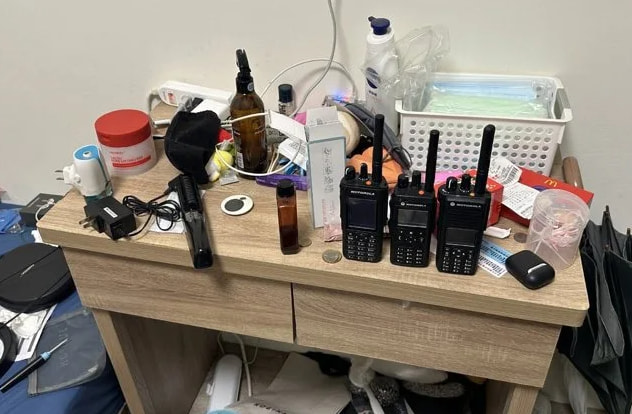
As noted by Bleeping Computer , the suspect's lawyer claims that his client sent the emergency signal accidentally, but investigators find this theory unconvincing.
THSR is Taiwan's main high-speed rail network. Trains travel along a 350-kilometer line along the country's west coast and reach speeds of up to 300 km/h. The network carries over 81 million passengers annually, and the project is partially funded by the government.
According to investigators, Lin prepared for the attack in advance. Using SDR equipment purchased online, he intercepted and decrypted TETRA (Terrestrial Trunked Radio) signals—a professional radio communications standard often used by emergency services, transportation, and government agencies. The student then programmed portable radios to impersonate standard rail network devices.
As a result, on April 5, Lin managed to transmit a priority "General Alarm" signal. The system interpreted it as a genuine emergency, and four trains automatically applied emergency braking. Service was restored only 48 minutes later.
Investigators believe the student was not acting alone. Police established that a 21-year-old accomplice provided him with some critical THSR network parameters, without which the attack would have been impossible.
This incident caused a significant stir in Taiwan, with local politicians already criticizing the railway operator for negligence. It turned out that the TETRA infrastructure used had been in operation for nearly 19 years, and during this time, the system parameters had remained virtually unchanged. This effectively allowed the attackers to bypass seven layers of verification.
After the incident, THSR specialists examined the logs and discovered that the alarm signal originated from a device that should never have been in use. However, the device itself had not disappeared, so the company suspected equipment cloning and contacted the police. Investigators retrieved TETRA network logs and surveillance camera footage, which eventually led them to the suspect's apartment.
Lin was detained on April 28 , and during a search, police seized 11 portable radios, an SDR system, and a laptop. He is currently charged under Article 184 of Taiwan's Criminal Code, which carries a maximum sentence of 10 years in prison. The student is currently free on bail of 100,000 Taiwan dollars (approximately $3,280 US).
As noted by Bleeping Computer , the suspect's lawyer claims that his client sent the emergency signal accidentally, but investigators find this theory unconvincing.